Visualising Knowledge
- Date
- 28 May 2026
- Time
- 16:00 -18:00
- Location
- University Library
- Room
- Surgical Theatre
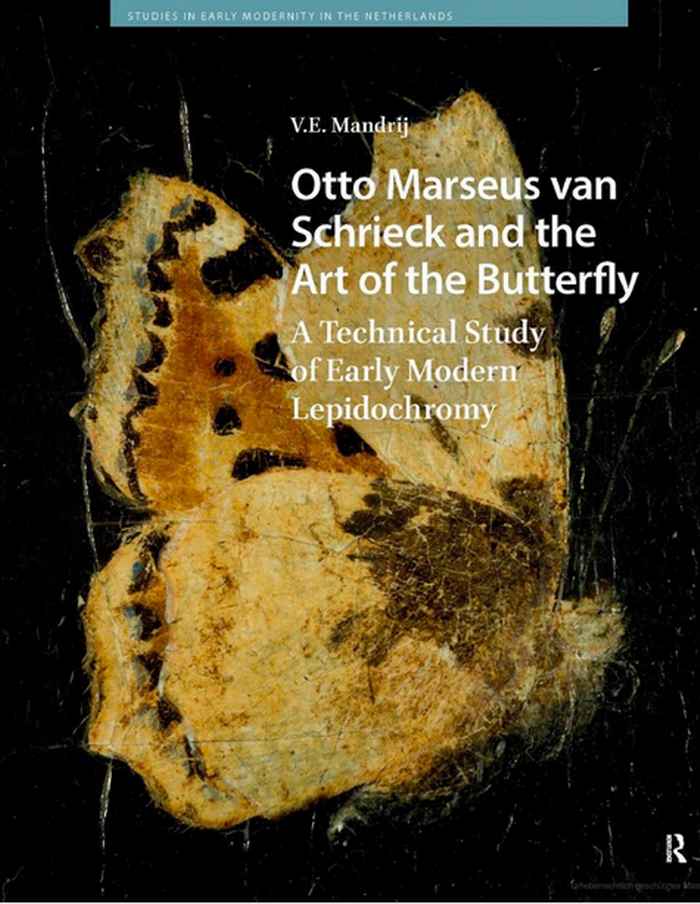
After presenting their new book, V.E. Mandrij will be interviewed to further develop several aspects of the book, which as been using interdisciplinary methods from art history and the history of conservation. In addition, researcher Rens Bod will dive into his research results about insects in the history of humanities as described in his last publication Het Unieke dier (Prometheus, 2025) and how this research can be related to Mandrij's work.
An interactive part will occur with the presentation of an original painting by Otto Marseus van Schrieck as well as butterfly imprints that have been remade and used as a tool and method for Mandrij's research.
About Otto Marseus van Schriek and the Art of the Butterfly
Otto Marseus van Schrieck and the Art of the Butterfly (Routledge, 2026) is the first monograph dedicated to this wonderful Dutch painter and his technique of printing butterfly wings in his paintings and first book entirely dedicated to the the lepidochromy technique. Marseus van Schrieck (c. 1620–1678), became famous for an unusual iconography that mixed characteristics of landscape, animal painting, natural history illustration, and still life: the sottobosco paintings. These artworks, which he developed during his voyage to Italy around 1650, represent reptiles, amphibians, and insects in dark forests. To increase the realistic representations of butterflies and moths, he pressed the wings of dead specimens onto the paintings to transfer their original colours. The technique of printing butterfly wings, named lepidochromy in this book, was already being used in the sixteenth century and has been documented as a means of conserving and classifying lepidopterans from the eighteenth through twentieth century.
With a strong focus on the techniques and materials involved in making butterfly imprints, this book introduces readers for the first time to the development, uses, and meanings of lepidochromy in the oeuvre of Otto Marseus van Schrieck at the crossroads of art and natural history.
V.E. Mandrij is an art historian and an author who has studied, researched, and worked in Switzerland, Italy, Belgium, the Netherlands, and Germany. They published several articles, including in the Netherlands Yearbook for Art History (2021) and co-edited the book Insects and Colors between Art and Natural History (2025). Currently, they are working as an expert in old master and 19th-century paintings in Switzerland.