“A wild work”. The Affective Strategies of Pieter Cornelisz Brederode (1559-1637)
Recent histories of the Dutch Revolt have rightly argued that international relations were central to its success. But how were international relations made in the sixteenth and seventeenth centuries? How were they sustained? In this talk, Helmer Helmers uses the career and correspondence of one diplomat, Pieter Cornelisz Brederode, to illustrate some of the practices Dutch diplomacy developed to make durable relations in Europe. Soft power, he argues, was an essential, but often underestimated part of the diplomat’s mission.
Event details from: “A wild work”. The Affective Strategies of Pieter Cornelisz Brederode (1559-1637)
- Date
- 19 May 2026
- Time
- 15:30
- Room
- A 0.08
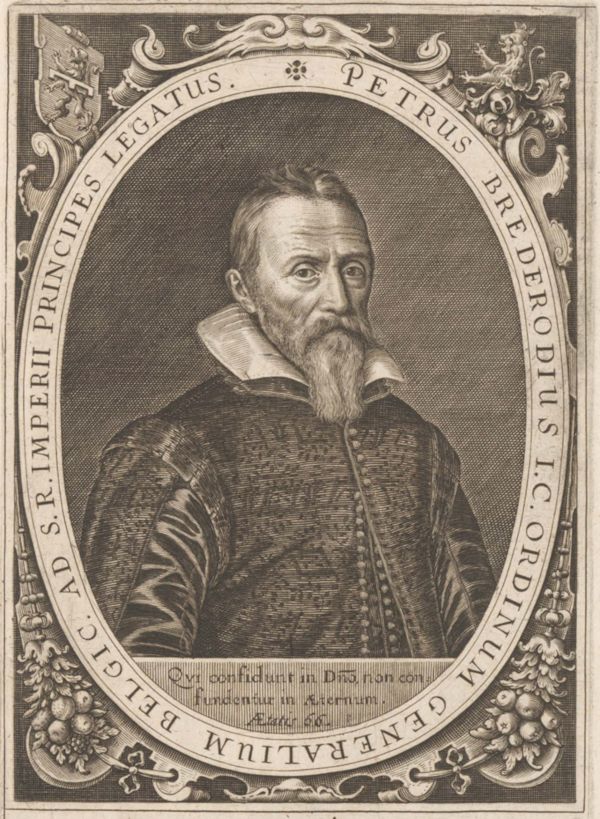
Brederode was one of the longest-serving diplomats of the Dutch Republic, and one of its most remarkable. Between 1602 and 1625, Brederode served the States General of the Dutch Republic as agent to the Protestant Princes, Estates and Cities of the Holy Roman Empire. The pressures of the Thirty Years’ War (1618–1648) forced Brederode's relocation to Strassburg and later to Basel, from where he continued to serve the States General as envoy to the Swiss evangelical cantons until his death in 1637.
Throughout his career, Brederode laboured incessantly, to various degrees of success, to build German support for the Dutch Republic. He had little to offer in return—his entire mission rested on his long-term strategy of ‘building the affections’.